The History of Computing
The history of computing began with simple mechanical devices such as the abacus, invented thousands of years ago to assist with basic arithmetic.
In the 17th century, early mechanical calculators laid the groundwork for automated computation.
The 19th century saw Charles Babbage design what was called the Analytical Engine, the first true computer concept, though it was never completed.
Ada Lovelace, working with Babbage, is considered the first computer programmer.
In the 20th century, electromechanical devices gave way to fully electronic machines.
Alan Turing’s theoretical work and machines provided a mathematical foundation.
The British Colossus was the first ever programmable digital computer. This top secret computer came into service at the end of 1943 and was developed to break the codes of German encrypted communications.
Although Colossus operated two years earlier than the publicly well-known American ENIAC, it never received the proper credit due to its top-secret status during and after the war.
The invention of the transistor (1947) and integrated circuits (1950s–60s) led to smaller, faster and more powerful computers, ultimately creating the personal computer revolution of the 1970s and 1980s.
In the 21st century, computing advanced into the age of artificial intelligence (AI).
Machine learning, deep learning and computer programs inspired by the human mind that could learn patterns from data (neural networks) allow modern AI systems to recognize patterns, partially understand language and even generate human-like text and art.
From simple counting tools to advanced machines, computing has grown into one of the most powerful forces shaping human civilization.
But the next revolution in computing is only a couple of years away.
ExoTech will take computing technology where it cannot hope to enter with its current operating structure.
The rigid, robotic structure of current computing can never approach the all-encompassing range of applications that the infinitely flexible structure of ExoTech will provide.
This is a key fundamental difference between current computing and ExoTech.
This is one key reason why ExoTech will change the world.
And YOU can help change the world by sharing these very short videos:
Intro to ExoTech Three+ Minutes
https://exotech.bm/exobrain3-intro-finale
The ExoTech Paradigm Shift Eight+ Minutes
https://exotech.bm/paradigm
Introduction to the Confidential Technical Briefing Six+ Minutes
https://exotech.bm/tech-team-videos/introduction-to-the-confidential-technical-briefing
If anyone might be a prospect to become a team member, contact Juanita Merrill:
Public.Rec.Dir@exotech.bm
For more of my articles, see The ExoFuture Alert
https://exotech.bm/category/the-exofuture-alert
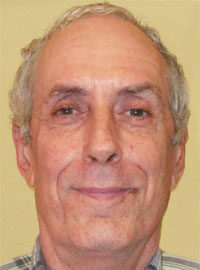
An ExoTech Ltd shareholder, David achieved a Bachelor of Science degree in Mathematics from Buffalo State College and has worked in a variety of capacities in marketing, publishing and public relations.
He has served in positions as Director/Vice President Media Relations and Executive Director for Zebra Communications, the world's leading provider of feature story public relations campaigns for Industrial and Technology Companies. He has gained extensive experience in media placement, article editing and has conducted email marketing programs during his marketing career.